Munsusan Rock-Carved Bodhisattvas: A Goryeo-Era Face Carved Into the Mountain
still watching over the mountain after a thousand years
Say Yongin, and most people think of amusement parks or cafe streets first. Today I want to bring you somewhere a little different. In Munchon-ri, Wonsam-myeon, Cheoin-gu, near the peak of Munsusan, there's a rock-carved Buddhist figure that people of the early Goryeo era carved into the cliff face. It's called the Munsusan Rock-Carved Bodhisattvas — it sounds complicated, but broken down it's simple: bodhisattva figures carved into the rock face of Munsusan. It's not a grand temple or a towering statue, but the simple fact that it has quietly stayed on that spot in the mountain rock until now is reason enough to visit at least once.
Two Bodhisattvas Carved in Symmetry, With an Empty Center
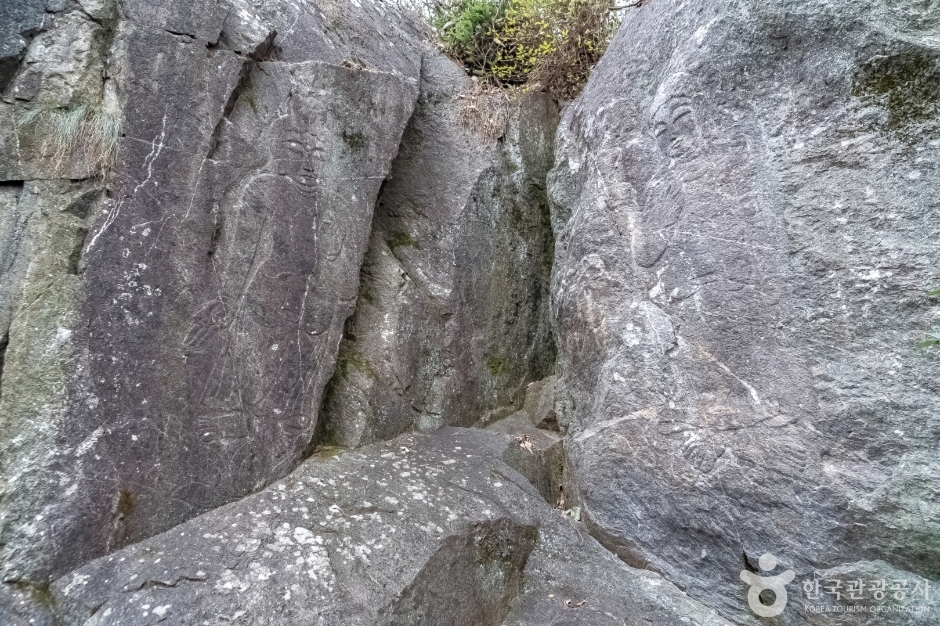
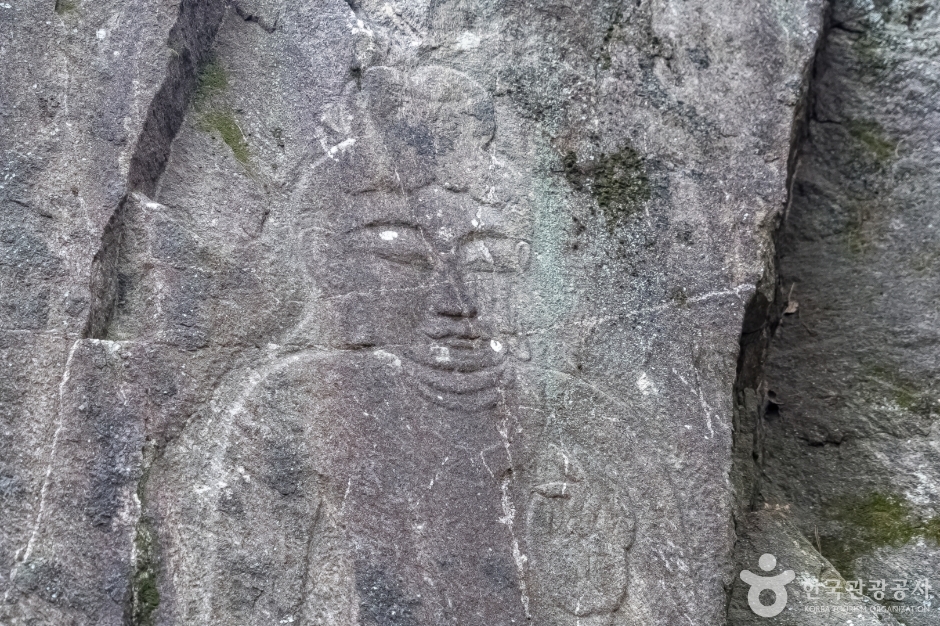
What makes this rock carving unique is its composition. The rock face is split into two, and on each rock, one bodhisattva figure standing on a lotus pedestal was carved, two figures in total, placed symmetrically. Normally, when carving Buddhist images, a main Buddha figure sits in the center with bodhisattvas placed on either side — but here, only the two bodhisattva figures remain, with no main Buddha in the middle. Whether there was originally a central figure that's since been lost, or whether the main Buddha was simply never carved in the first place, isn't something we can know for certain today. That one empty space is exactly what keeps giving people something to talk about with this carving.
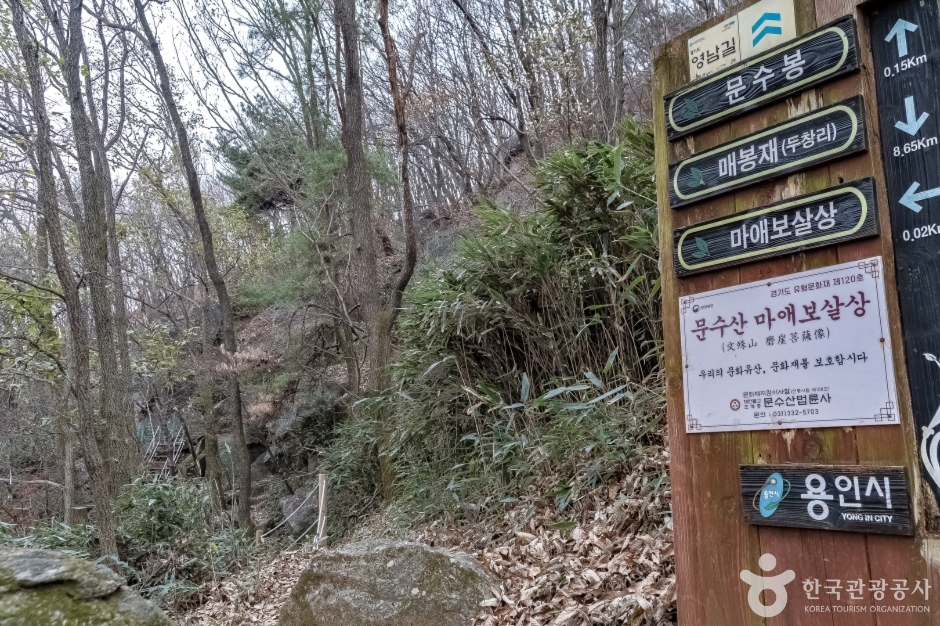
About 50m away from the rock carving, there's also a spot believed to be the site of a hermitage. It's a trace that makes you imagine someone actually living there and holding services in front of this rock. Since it sits close to the mountain peak, you'll need to walk up a fair bit, so if you're planning a visit, I'd recommend bringing comfortable shoes.
Two Bodhisattvas, Different in Expression Once You Look Closely
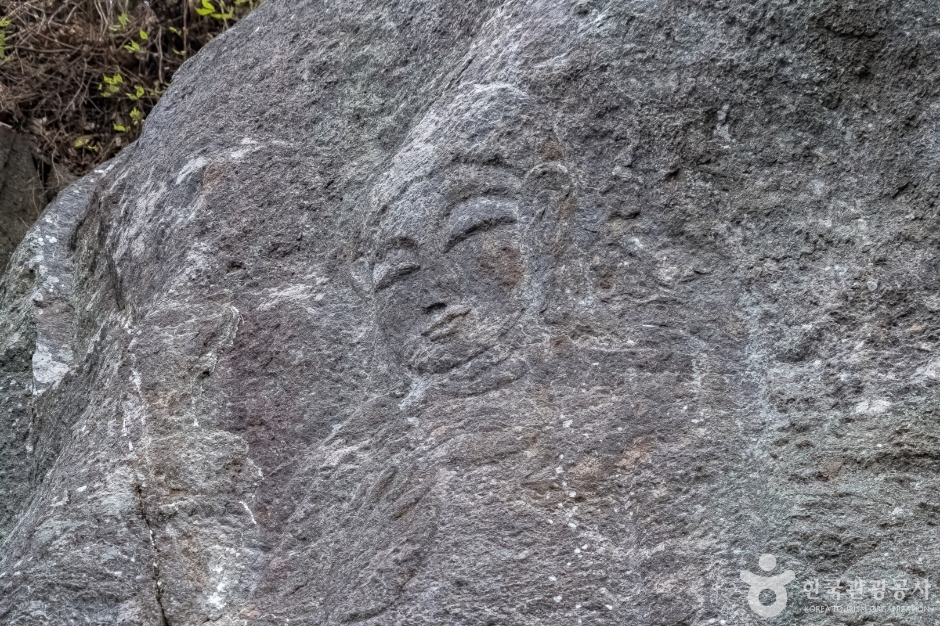
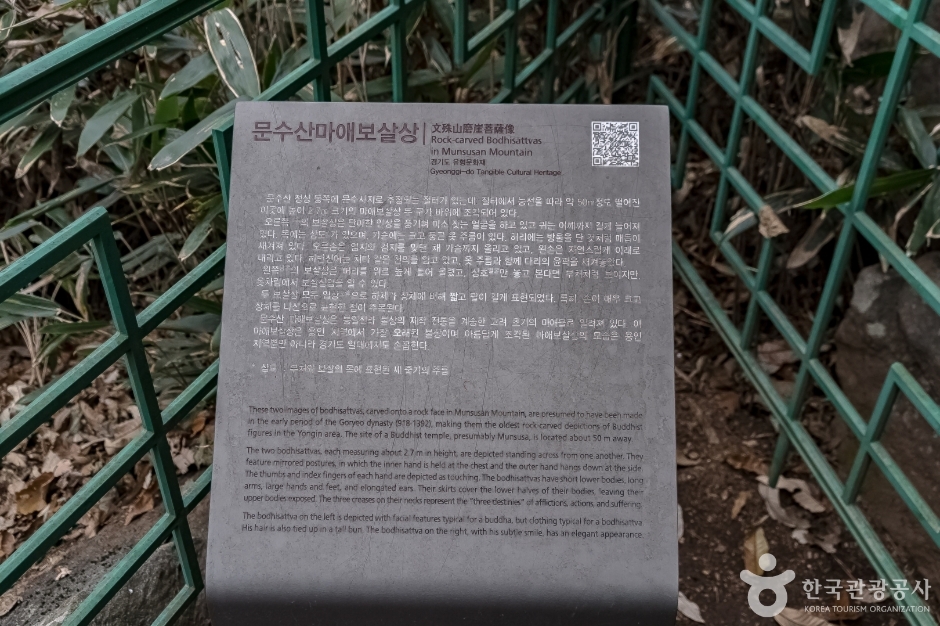
From a distance, the two bodhisattva figures look identical, but look closely and you'll see they each have their own character. The figure on the left is carved in shallower relief than the one on the right, and their headwear differs too — the right figure is bare-headed, while the one on the left appears to be wearing a crown decorated with jewels. Their facial features differ as well. The left bodhisattva has a square, full face with relatively distinct eyes, nose, and mouth, and its short neck even bears the samdo, three lines symbolizing the Buddha's wisdom. The right bodhisattva has a somewhat clearer smile, and its ears hang down long, all the way to the shoulders. A face large relative to the body, and body parts rendered simply and schematically, are features commonly seen in early Goryeo rock carvings.
The symmetry of two bodhisattvas left with an empty center — imagining what belongs in that empty space is the real fun of looking at this carving.
— 🐉 YongiThe address is Munchon-ri, Wonsam-myeon, Cheoin-gu, Yongin-si, Gyeonggi-do, and there are no fixed opening hours — it's open at all times, year-round, so you can visit whenever you like. It's not a place with facilities like a major tourist site, so I'd recommend bringing water or snacks with you before heading up. If you go expecting an elaborate cultural relic, it might feel somewhat modest, but the experience of facing a face that has quietly remained on a mountain rock for nearly a thousand years is special in itself.
YONGI's Tip · Keep in mind there's a climb involved, since it sits close to the mountain peak. Comfortable shoes and a bottle of water are enough. It's also worth checking the Korea Heritage Service website for the latest information before you go.